
‘Darkly Dreaming Dexter’
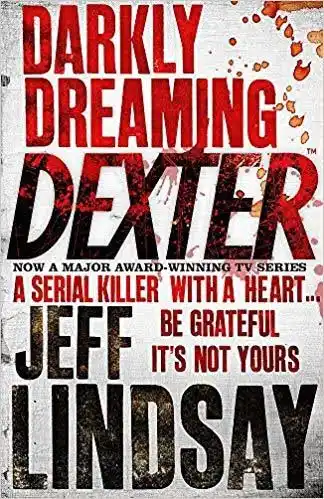
‘Darkly Dreaming Dexter’

Dexter, the television series, meant a lot to me as a budding horror fan and, in fact, it meant a lot to me as an author. I have written stories since I was seven or eight years old (my novel Forever with Love is even based off an old manuscript I started when I was thirteen), but it wasn’t until my freshman year of high school where I felt like it started to become a (hopefully) healthy obsession. In my World History class, out of boredom, I started writing the first chapter of what would eventually become my first novel Black & Yellow, a novel about a vigilante who kills serial killers. Although my novel is decidedly more action-based and, I feel, draws more from eighties horror and superheroes, there is no denying I was directly influenced by the Showtime show that was slicing its way on the scene to the hearts of millions. To my surprise, I later discovered that Dexter was based on a novel by an author named Jeff Lindsay (apparently oblivious to the credits shown at the start of every episode). Also, to my surprise, they carried the book at my school library – I can still remember it blowing my mind a little bit, both because of the subject matter and also because I wasn’t used to my school, where my graduating class was eleven students, having … anything.
The book, as you can imagine, was the basis for the first season of Dexter, focusing on the life and times of Dexter Morgan, a forensic blood spatter pattern analyst for the Miami Metro Police Department. Of course, that is only Dexter’s day job – his real calling is as a serial killer that hunts down and kills people, attributing his desire to kill as The Dark Passenger. The people he targets are also serial killers, ones he has studied and properly vetted in-order to be for certain they meet The Code of Harry, a set of guidelines taught to him by his foster father Harry Morgan.
If you have already seen the show’s adaptation, you will feel mostly right at home with how things go down in Darkly Dreaming Dexter. Most of the characters and their portrayals on the show were mostly faithful to the source material, although there are some noticeable differences you will find along the way. Firstly, Maria LaGuerta is the Lieutenant of Miami Homicide, benefiting from her Cuban heritage and the ability to play good politics, and she still has a bug up her ass when it comes to Dexter’s sister Deborah (spelled differently from the show’s Debra), but you’ll find that Deb’s (an up-and-coming police officer who finds herself working undercover as a prostitute) proportions are a little more … generous in the book (she’s nicknamed Einstein at the precinct because that’s what she’d be if “her brains were as big as her tits”). Other than that, the two other glaring things you will notice that’s different about the book versus the show are the endings and some of what’s in the show isn’t what is in the book (The Ice Truck Killer’s dynamic with Deborah is dramatically different and the end of the show and book are both dramatically different as well).
You know how with a lot of movie adaptations, they cut out a lot of important parts from the book in-order to make certain everything can fit into a nice, compact feature-length runtime? That isn’t the case when it comes to Dexter versus Darkly Dreaming Dexter, as the book’s brisk 288 pages breeze by in-comparison to the show’s twelve hour-long episodes. There’s a lot of new things in the first season of Dexter, and, frankly, if I’m being honest, I definitely prefer the first season of the show over the book, but I also definitely recommend you read the book and embark on the Dexter book series if you haven’t.
Darkly Dreaming Dexter’s a good book. Saying the show did a better job than the book is a misnomer, Jeff Lindsay did so much of the heavy-lifting and so much of what’s in the book that worked really well goes onto then translate really well on the show. Furthermore, even if the Dexter you see in Season One and Book One are nearly identical, that doesn’t stay the same as the series goes on. The book is funny and very entertaining, but it is also the early beginnings for what is about to be a very wild ride for you. Although Showtime adapted Darkly Dreaming Dexter, everything else hereafter is uncharted territory. There is a lot of fun still left to be had (how the relationship with Dexter and Doakes differs in later books compared to the show are among some of the funniest things the show has to offer). There are also a lot of head scratching decisions (decisions that will make the very worst decisions in the television series seem brilliant by comparison). It’s a journey, and it’s a good journey, and I look forward to diving into Dearly Devoted Dexter next.