Book Review
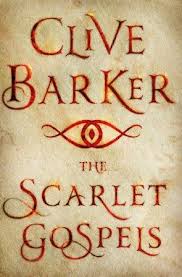
The Scarlet Gospels
Book Review · Archive Record
The Scarlet Gospels
2015Clive Barker
Review AuthorWesley Nyx360 total reviews · 279 movies · 79 games · 2 books
VIEW RECEIPT ↗
I have written a lot of reviews on Readers Digested over the years, but something I have never written is a book review. Crazy, isn’t it? I have been writing reviews in some form since 2007, and yet, I have never once shared my thoughts on a single book. This is especially obscene when you consider that I myself have written over a dozen novels and consider writing to be one of the greatest passions of my life. Truth is, that may be part of the reason I’ve never done it. It feels too personal and intimate, because, when I review something, I will be directly addressing a single person (and, potentially, their editor). Be that as it may, I decided I wanted to embark on a new journey for Readers Digested, because I want to be able to properly celebrate the things I love and enjoy, and encourage myself to read more in the process.
Clive Barker is a horror maestro if there ever was one. I don’t have to worry about hurting his feelings in a review on Readers Digested. Clive’s a made-man in these parts and the Hellraiser series is a major reason for why. There have been a dozen film adaptations (the original classic, a solid reboot, and, call me insane, but I honestly enjoyed Scott Derrickson’s film Hellraiser: Inferno), as well as graphic novels and, this year, even a videogame adaptation.
The Scarlet Gospel, released in 2015, acts as a sequel to Clive Barker’s 1986 novella The Hellbound Heart, and, actually even feels like a celebration of everything that came after it. Sure, you won’t see any references to Pinhead and his demon friends’ journey into space from Hellraiser: Bloodline, but it definitely feels like a novel that was written with fans in mind. The Hell Priest or The Cold One was never explicitly named in The Hellbound Heart, but, in The Scarlet Gospel, he is often referred to as Pinhead (and is more than a little pissed off by it). For that reason, if you so chose, The Scarlet Gospel can be jumped into without much homework needed – you remember the basics, that Pinhead is a mean son of a bitch and that you’re in for a lot of colorful ways to describe extreme genital mutilation.
Someone you may benefit from knowing more about, however, is the character Harry D’Amour and the adventures he has had, whether it be as a comic-book character, a character in Barker’s Books of Blood story compilations, or in the 1995 film Lord of Illusions.
Surprise!
The Scarlet Gospels is actually something of a crossover event for Clive Barkers’ books. Honestly, I wasn’t familiar with the Harry D’Amour character before reading The Scarlet Gospel and also wasn’t aware of his involvement in the book until it was too late (I read The Scarlet Gospels across two days on a car trip from Illinois to Miami).
In retrospect, I can see how knowing more about the Harry D’Amour character would have enhanced my enjoyment of the novel – it would have helped make it feel more important and more like an ‘event’ in Clive Barker’s bibliography. On the other hand, I feel like the character is simple and archetypal enough that I can tell you the book is John Constantine versus Pinhead, and while it won’t be exactly right, it will be close enough to get you to about where you need to be.
Harry D’Amour acts as the protagonist for the novel, although he does feel smaller and more inconsequential compared to the antagonist and their hefty ambitions. Harry is, for the most part, a mere mortal. There is some knowledge and he is fast on his feet, but he is still only human. Thus, it’s a little bit like saying the main foil in the Godzilla movie is one of the humans he towers over. It’s technically true, but, … you know. Pinhead, or the Hell Priest, has been a busy boy. He has begun a regime to target all of the magicians in the world, kill them, learn their magic and incantations, then, burn the books. This is all done with the greater goal of conquering the world and bringing the apocalypse.
I have heard a lot of criticisms about this book. One of the most common conspiracy theories I have seen thrown around is the belief that Clive Barker didn’t write the novel. It is a common theory I have seen with the idea that Clive Barker had a crude outline for the novel, and a ghostwriter came in, trimmed it up, and got it out the door. It is a conspiracy that hasn’t been confirmed and is, as far as I can tell, only based on two pieces of information – Clive Barker once claimed to have a manuscript that was well over one-thousand pages for The Scarlet Gospels, the other piece of evidence is the writing for the book itself. The prose doesn’t feel like Clive Barker.
It feels, for lack of a more apt term, like a normal, conventional book. If you’ve read The Hellbound Heart or many other stories by Clive Barker, you’ll know he is a flowery and verbose writer. He sets the mood and the atmosphere, and he is very good at it. If this were a film, he’s the director who concerns himself more with cinematography and lighting than he does what’s actually happening in the film. The Scarlet Gospels, on the other hand, doesn’t feel like that. It is well written. It is good, clean writing and writing that feels very digestible for a casual reader. It isn’t the grandiose spectacle that I think everyone really wanted for the book. Simply put, when I finished reading The Scarlet Gospels, I found myself longingly asking where the other thousand pages went.
This comes with some good and some bad. I don’t know if Clive Barker actually had a ghostwriter involved in the creation of The Scarlet Gospels, and I don’t believe there is much real reason to believe he did, but I do think the novel feels very homogeneous and palatable than what he is known for. Part of me wishes he would’ve went wild, released a thousand-something page long monstrosity, and let it ride. On the other hand, I could see a publisher’s stance that his usual writing style would’ve been a little less penetrable for a general audience, and I could also see the argument that a cleaner approach to the prose may work better for a longer story than his normal writing style would have. For instance, although I liked his writing style in The Hellbound Heart, I believe applying exactly that approach would have made for a dense read applied to a book of the supposed length. Concision is a writing skill in and of itself. Thus, I don’t really have a lot of criticisms about the writing itself.
Instead, the biggest criticisms I came away with for The Scarlet Gospel pertain to its pacing and handling of its story.
The Hell Priest carries such a presence in The Scarlet Gospels. In the eighties (and nineties, and, well, … now), you would be forgiven if you grouped Pinhead and the Cenobites with Freddy Krueger and Michael Myers, and the rest of the slasher film rogues’ gallery. However, this book makes it abundantly clear that what we’re reading is more dark-fantasy than it is a horror story. It does very well at building The Hell Priest up as a formidable threat, an unbeatable odd, and a menacing adversary to humankind. By the end of the book, however, I couldn’t help but feel like the payoff sucked all the air out of the room. The book did such a good job at setting the table, but “That’s it?” was the sentiment I ended up coming away with. It felt so anticlimactic to me that it retroactively made me second-guess everything else that came before it.
The Scarlet Gospels is worth the read for any fan of the Hellraiser series. If, in part, because you aren’t exactly walking on the most sacred grounds. With about a dozen films, I prefer The Scarlet Gospels as a book to nearly any of the films, sans, maybe, the first. I liked it, I really did. However, looking back, I couldn’t help but wish I would have gotten more time with each character and that the second-half would have been allowed to let breathe a little more. The Scarlet Gospels is a good book, but I think it had the makings of a great book.