Resident Evil
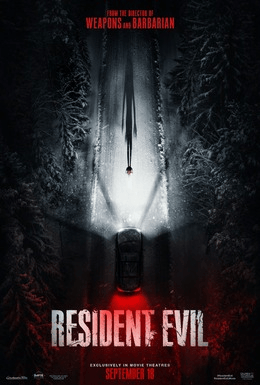
Resident Evil
VIEW RECEIPT ↗
It’s always a nice feeling to be able to say you have supported somebody before they found mainstream stardom. As a kid, I can remember hanging out with friends and watching clips of the Whitest Kids U’ Know on YouTube or laughing up a storm, watching the critically maligned Miss March (Zach Cregger’s actual directorial debut, not Barbarian). Back then, I never would have thought that random comedian I was watching do crude sketch comedy would go onto be one of the most influential horror directors of the modern era. Who would have thought we’d find ourselves twenty years later with a critically-acclaimed adaptation of Resident Evil, directed by that very same person.
For a lot of us, myself included, the announcement that Zach Cregger would be taking the reins of the Resident Evil film franchise was met with excitement. After Barbarian put Cregger on the map, Weapons came out, making nearly 300 million at the box-office, decreeing Cregger a force to be reckoned with. Meanwhile, at least as far as the film series is concerned, Resident Evil had been feeling like it was on life-support.
It was never that the Resident Evil live-action movies weren’t successful.
Although they were never major box-office juggernauts in the United States, they always found an audience someplace, somewhere. The Paul W. S. Anderson movies took Resident Evil in a weird direction. Whereas the videogames focused more on horror, the Anderson movies leaned more into the science-fiction and action of the series. The stories were unique, offering a new protagonist named Alice, played by Milla Jovovich, and only occasionally bringing in things from its videogame namesake.
If you looked at the movies and compared them to the videogames, you would scratch your head in confusion – until, around, maybe, Resident Evil 5 and 6, then the movies and games start to gel in their bonkers sci-fi mayhem.
Every release, the movies were damned into oblivion, with not a single film receiving positive reviews from critics or series fans. Stateside, they never really took off in a major way. Even the best performing Resident Evil film Resident Evil: Afterlife only made about 60 million in the United States. However, the movies had a worldwide appeal that always kept them alive. Resident Evil: The Final Chapter only made a measly 26 million in the United States, but the film ultimately made 314 million worldwide.
The biggest problem with the series, and I say this with all due respect to everyone who might be a fan of the movies, is that they were never good or even the least bit cohesive. They were the epitome of everything wrong with movie adaptations of popular videogames. Adaptations that feel like they don’t respect the series that they are pulling from.
After The Final Chapter, they rebooted the series with Resident Evil: Welcome to Raccoon City.
The play was basically to adapt the Resident Evil 2 game, to do Leon and Claire’s origin story. It was an adaptation much closer to what fans have been asking for. It was calmer, more direct, and more personal, but it was also much less successful -making 42 million worldwide and receiving mixed-to-negative reviews.
Now, here we are, five years later, with a new reboot. And, at long last, they did it. The new Resident Evil film has received critical acclaim from critics and made over 400 million worldwide and more domestically than the previous four Resident Evil movies combined. Don’t you love a happy ending?
Sadly, there are still a handful of naysayers against the film. They was so much hate thrown the movies’ way before it even came out that Cregger basically swore off franchise movies altogether (although, if there’s enough zeroes on his next paycheck, who knows if that’ll last).
Personally, I have no problem with anyone who may not like the Resident Evil film. This is Readers Digested, and we welcome all types of criticisms and opinions, whether we agree with it or not. This one is mine.
I understand some Resident Evil fans and their hangups with the film. It isn’t a direct adaptation of any direct Resident Evil story. Instead, this film is about Bryan, played by Austin Abrams, a medical courier who is tasked with delivery a package to the Raccoon City Hospital during a zombie outbreak (coinciding with the events of the second Resident Evil game and, if you want to look at it that way, Welcome to Raccoon City). Bryan isn’t an army man like Chris Redfield nor is he a man of action like Leon Kennedy, instead, he is a stoner-type that’s a little rough around the edges.
I can see why some people longed for a direct adaptation of one of the games, but I’m in the Cregger camp. I have already played and experienced the Resident Evil’s, and I had a blast with them, I have no interest in seeing a version of Leon or Chris’ story that takes the controller out of my hands.
It is an interesting topic of debate when it comes to adaptations of videogames. How should you adapt a Resident Evil game? Let me pose a different question – how should you adapt Elden Ring? We will have our answer to that soon when A24’s movie comes out, but I’d argue the best way to make that film would be to have a warrior vanquish big baddies. Thing is though, any trait you add to that warrior will be inherently new because the game didn’t impose many personality traits to its protagonist. Furthermore, there are dozens of enemies in Elden Ring, surely you can’t stage a major fight scene for all of them. You could make a whole Elden Ring quadrilogy and only cover a third of it. How about Grand Theft Auto? Do you pluck out C.J. and set it in San Andreas? It’s dicey. Obviously, if you adapt something like Mario, it needs to be about Mario, and if you adapt Sly Cooper, it needs to be about a thieving raccoon. However, I’d argue the recipe a good recipe for success with Resident Evil is to make a Resident Evil movie that feels like it could’ve been a Resident Evil game.
Zach Cregger’s Resident Evil may not directly adapt a Resident Evil game, but this isn’t Paul W. S. Anderson doing whatever he wants, this is an adaptation that celebrates and tries to capture the spirit of Resident Evil. The action is nonstop, the creature design feels right at home with the Capcom series, whereas, the attention to detail and unique cinematography does everything to make sure this is the most distinctly Resident Evil film ever made.
By the time the credits rolled on the Resident Evil film, I was more than satisfied with it.
Like what is happening with Curry Barker since his film Obsession, for a while, it felt like the machine had really gotten behind Zach Cregger. I am all for when they normalize making the director the star of a film, because it allows new faces to show up on our screen and it positions the audience to expect a certain pedigree and quality to a film’s production. You never know when a director will lose their shine, however. Jordan Peele released Get Out and Us as two back-to-back horror juggernauts, achieving both critical acclaim and a massive return on investment, but followed it with the modest (but still perfectly enjoyable film) Nope. For that reason, I am always expecting there will come a time when a director will fall out of fervor with the general public, either because they put out a stinker or a film that couldn’t match what came before it.
The new Resident Evil doesn’t set the world on fire, but it feels like a real, honest to God attempt at making a great horror film. Its Easter eggs are delivered through its attention to detail, and its scares feel Resident Evil-y without feeling like a re-tread of territory we’ve already seen covered. The camerawork is on-point, the score matches the intensity of the roller coaster it is showing on the screen.
All of it isn’t perfect though, in fact, I did come away with a good, handful of criticisms along the way, largely pertaining to the main character Bryan and the actor’s portrayal of him and a lot of the humor in the film. In an interview, Cregger said he ended up leaving a lot of jokes on the cutting room floor because of study groups that told him the film was ‘too funny’. I personally wish he would have left a lot more of the jokes on the cutting room floor. Most of the jokes in the film are harmless, offering brevity to the situation, but some of them I found severely undercut the stakes of the film.
Beyond the basic premise of Resident Evil and Bryan trying to deliver a package amidst a major zombie outbreak, another crucial part of the story is Bryan realizing his girlfriend is pregnant. It’s a story that they sometimes circle back and try to make a significant source of symbolism of the film, but one I find feels severely undernourished by the time the film ends. The way it currently sits, it makes me feel like a lot of story developments ended up on the cutting room floor, and favor of keeping things mostly breezy and leaning into the audacity of what was happening instead. There are so many moments something happens and I wish they would have allowed themselves to just sit with what happened for a few seconds and let the severity sink in, and instead, it is met with a witty quip before Bryan goes on about his way.
Resident Evil is a good film, and it should be celebrated and revered as such, at least, that’s what I think. The story feels fun and different, with a sleek runtime and balls-to-the-wall action. At the same time, I think what makes it a little bittersweet is that it feels like it could have been a great one.